

General
What Is Monsoon Flush Tea? Assam’s Rainy-Season Harvest, Explained
Jul
What Is Monsoon Flush Tea? Assam’s Rainy-Season Harvest, Explained
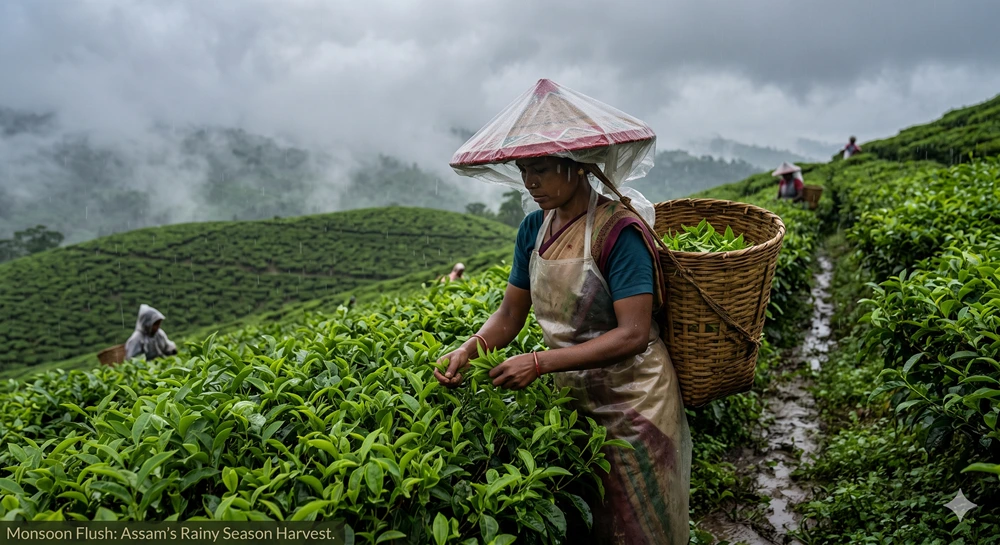
Right now, across Assam, it’s raining on the tea.
The skies have opened, the Brahmaputra is running high, and the bushes are growing faster than at any other point in the year. This is monsoon flush season — the harvest most tea lovers have never heard of, yet the one quietly responsible for most of the chai in the country.
If you’ve ever wondered why your daily cup tastes the way it does, this is the season that made it. Here’s what monsoon flush actually is, how it differs from the prized second flush, and when it’s exactly the right tea to reach for.
First, what does “flush” mean?
A tea bush doesn’t grow at one steady pace all year. It pushes out new shoots in waves, and each wave — each flush — arrives in a different season with a different character. In Assam, the year runs roughly like this:
- First flush (March–April): light, brisk, fresh.
- Second flush (May–June): the prize — malty, smooth, golden-tipped.
- Monsoon flush (July–September): strong, dark, robust. Also called the rains flush or third flush.
- Autumnal flush (October–November): mellow and gentle.
Same garden, same bush — four very different teas, set apart by nothing more than when the leaf was picked.
What makes monsoon flush different
The monsoon changes everything about how the leaf grows.
With heavy, constant rain and warmth, the bushes grow fast — far more leaf, far more quickly than in the dry months. But speed has a trade-off. All that rapid, rain-fed growth produces leaf that’s bigger and more abundant, but less concentrated in flavour. Where second flush builds its character slowly in the dry early-summer heat, monsoon leaf races ahead.
The result in the cup is distinctive:
- Strong and brisk — a bold, full-bodied liquor with real briskness.
- Dark in colour — it brews to a deep, robust red-brown.
- Less nuanced — it trades the honeyed, layered subtlety of second flush for sheer strength.
- Built for milk — that strength is exactly why it holds up so well to milk, sugar and spice.
In short: monsoon flush is muscle, not finesse. And there’s a perfect place for that.
The honest truth: monsoon flush is the backbone of chai
We’ll always tell you straight — it’s how we do things.
Monsoon flush is not the connoisseur’s harvest. If you want to sit and savour a complex, aromatic cup black, June’s single-estate second flush is the one you want. We won’t pretend otherwise.
But here’s what monsoon flush is: the dependable, hard-working heart of everyday Indian tea. That bold strength is precisely what masala chai needs — a cup that won’t get lost under milk, sugar and ginger. Most of Assam’s CTC tea, the granular leaf behind the nation’s daily chai, leans heavily on this rains harvest. It’s high in volume, excellent in value, and reliable in strength.
Think of it like this: second flush is the bottle you open on a quiet evening to taste the garden. Monsoon flush is the tea that gets you through every busy morning of the year. You need both — and most kitchens quietly do.
When should you choose monsoon flush?
Reach for it when you want:
- A strong morning cup that wakes you up properly.
- Masala chai or milk tea with enough body to carry milk and spices.
- Great value for everyday, high-volume drinking.
- A no-fuss, reliable brew — strong, consistent and forgiving.
Skip it when you want a delicate, aromatic tea to sip black and slow. That’s second flush territory.
How to brew monsoon flush well
Its strength is the whole point, so brew to bring it out — but don’t let it turn harsh.
For a milky chai, bring water to a boil, add the CTC and let it brew strong before adding milk and spices. For a straight cup, use water just off the boil and steep 3–4 minutes. Because monsoon leaf is bold, it’s forgiving of a generous hand — but over-boiling for too long will still push it into bitterness, so pull it when it’s deep and bright rather than stewed black.
Tasting the seasons, side by side
This is the part we love. Brew a monsoon flush and a second flush from the same gardens — Halmari, Jogipathar, Mouling — and the seasons reveal themselves in your own cup. One is bold and brisk; the other, smooth and honeyed. Same soil, same bushes, months apart. That’s the quiet magic of single-estate tea, and the reason we talk about gardens and seasons at all.
You can taste exactly that at our store on GS Road, Christian Basti, Guwahati, or order both online and run the comparison in your own kitchen. We are Assam — rains and all — and there’s a right cup for every season of it.
Frequently asked questions
What is monsoon flush tea? Monsoon flush is Assam’s rainy-season harvest, picked roughly from July to September. The heavy rain makes the bushes grow quickly, producing a strong, brisk, dark tea that’s bolder but less nuanced than the prized second flush. It’s also called the rains flush or third flush.
Is monsoon flush tea good? Yes — for the right purpose. It’s strong, full-bodied and excellent value, which makes it ideal for masala chai and milk tea. It’s not meant for delicate sipping black; for that, a second flush is the better choice.
What’s the difference between second flush and monsoon flush? Second flush (May–June) is smooth, malty and aromatic, prized for sipping. Monsoon flush (July–September) is stronger, darker and brisker, built to carry milk and spice. Second flush is finesse; monsoon flush is everyday strength.
Why is monsoon flush used for chai? Its bold strength stands up to milk, sugar and spices without thinning out, which is exactly what masala chai needs. Much of Assam’s CTC tea — the backbone of Indian chai — comes from the monsoon harvest.
When is the monsoon flush season in Assam? Roughly July to September, during the heart of the Assam monsoon, between the second flush of early summer and the autumnal flush of October–November.
