
General
Where to Buy Authentic Assam Tea in Guwahati (And How to Spot the Real Thing)
Jun
Here’s an uncomfortable truth for the tea capital of the world: most “Assam tea” sold in Guwahati isn’t telling you the whole story.
You can buy a packet labelled Assam on almost any street. Whether what’s inside is genuine single-estate garden tea — or a generic blend wearing the region’s name — is a different question entirely. And in a city sitting at the doorstep of the world’s most famous tea gardens, you deserve better than a guess.
This is a straight guide to buying authentic Assam tea in Guwahati: how to tell the real thing from the merely “Assam-branded,” what to ask, and where to taste before you commit.
“Assam tea” vs. tea actually from an Assam garden
The word Assam on a packet is a region, not a guarantee.
A great deal of tea sold under that name is a commodity blend — leaf bought at auction in bulk, mixed across sources, and packed to a price point. It will be brown, it will be strong-ish, and it will be perfectly forgettable. None of that is illegal or even unusual. It simply isn’t what people imagine when they picture Assam tea.
What you actually want is single-estate tea: leaf traceable to a specific, named garden, plucked in a specific season. That’s the difference between “Assam tea” and Halmari second flush — between a region and an address. Single-estate tea has a character you can taste: the soil, the elevation, the plucking standard of one particular garden, in your cup.
If a seller can’t name the garden, you’re almost certainly holding a blend.
How to spot authentic single-estate Assam tea
You don’t need to be an expert. You need four quick checks.
1. Ask where it’s from — and listen to the answer. “It’s Assam tea” is not an answer. “This is second flush from Halmari” is. A genuine seller names gardens easily because they actually know their sourcing. Vagueness is the tell.
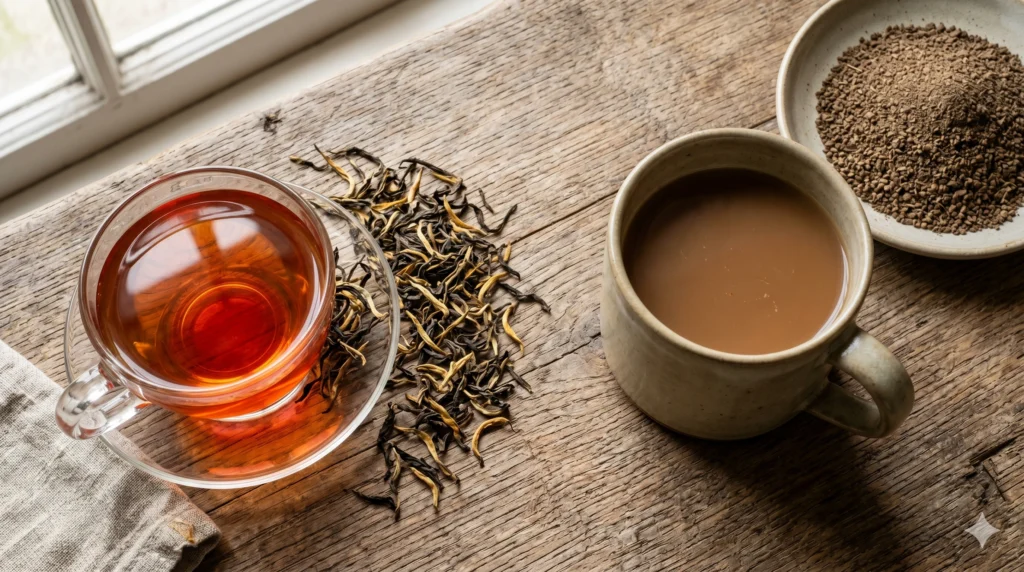
2. Look at the leaf, not just the label. Good orthodox Assam shows whole, twisted leaf and — in a quality second flush — visible golden tips. A uniform brown dust with no variation usually means a commodity-grade blend. (Note: quality CTC is meant to be granular, so judge CTC and orthodox by their own standards.)
3. Smell it dry. Real Assam smells of something — malt, dried fruit, warmth. If the dry leaf smells of nothing, the cup will too.
4. Brew and watch the liquor. Authentic Assam brews to a bright, coppery red-amber. A flat, muddy brown is a warning sign.
Do these four things and you’ll filter out 90% of generic packs before you’ve spent anything.
Why buying from a dedicated tea store beats the supermarket shelf
A supermarket sells tea the way it sells soap — by the shelf-metre, with no one to ask. A dedicated tea store sells it the way it deserves to be sold: with knowledge, freshness and the chance to taste.
Three things you only get from a real tea store:
- Provenance you can trust. Someone can tell you the garden, the flush and the grade — and back it up.
- Freshness. Tea is seasonal and perishable. A store that moves through its stock keeps the leaf bright; a packet aging on a hypermarket shelf does not.
- Tasting before buying. This is the big one. Your palate is not the same as anyone else’s. Tasting two teas side by side tells you more in thirty seconds than any label ever will.
For a deeper look at the city’s tea landscape, our guide to the best tea in Guwahati breaks down what to look for across types and price points.
Buying authentic Assam tea at Namhah, GS Road
We’re particular about this because we live it. We are Assam — and we built our store around the idea that you should taste your tea before you take it home.
At our outlet on GS Road, Christian Basti, Guwahati 781005, you can do exactly that. Compare a robust CTC against a fine second flush. Smell the season’s freshest leaf. Ask which garden it came from and get a real answer — because we source from named estates like Halmari, Jogipathar and Mouling, not from an anonymous auction lot.
It’s why the store has earned over 1,200 Google reviews and become a fixture for tea lovers in the city — locals stocking the kitchen, and visitors taking a genuine piece of Assam home. With more than 50 million cups behind the brand, we’ve had a little practice getting the cup right.
And if you can’t make it to the store, the same single-estate tea ships fresh across India.
A quick checklist before you buy
Before you hand over money for “Assam tea” anywhere in Guwahati, ask yourself:
- Can the seller name the garden?
- Can they tell you the flush or season?
- Can you see whole leaf or proper grade — and smell real aroma?
- Can you taste before you buy?
If the answer to all four is yes, you’ve found the real thing. If not, keep walking. In this city, authentic Assam tea isn’t hard to find — you just have to know what you’re looking for.
Frequently asked questions
Where can I buy authentic Assam tea in Guwahati? Buy from a dedicated tea store that sources single-estate, garden-traceable leaf and lets you taste before you buy. The Namhah Tea store on GS Road, Christian Basti, Guwahati offers single-estate tea from named gardens like Halmari, Jogipathar and Mouling, with tasting at the counter.
How can I tell if Assam tea is authentic? Ask the seller to name the specific garden and flush. Genuine single-estate tea shows whole or properly graded leaf, smells of malt and dried fruit when dry, and brews to a bright coppery red-amber. If the seller can only say “Assam tea” with no garden, it’s likely a generic blend.
What’s the difference between single-estate and blended Assam tea? Single-estate tea comes from one named garden and one season, so it has a distinct, traceable character. Blended “Assam tea” mixes leaf from many sources to a price point and tends to taste generic, even if it’s strong.
Is it better to buy tea from a store or a supermarket? A dedicated tea store offers provenance, fresher stock, and the chance to taste before buying — none of which a supermarket shelf provides. For quality and value, a specialist store is the better choice.
Can I buy authentic Guwahati Assam tea online? Yes. Namhah Tea ships fresh single-estate Assam tea across India, so you can get garden-traceable tea even if you can’t visit the GS Road store in person.
