
General
Ambubachi Mela 2026: A Guwahati Host’s Guide to Serving Great Tea to Your Guests
Jun
For four days every June, Guwahati becomes the centre of something far larger than itself.
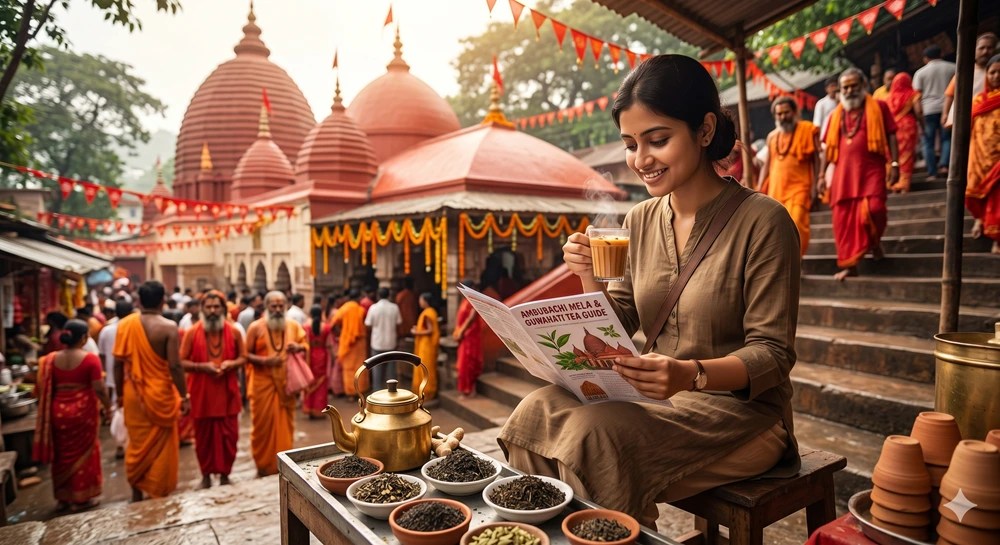
Ambubachi Mela 2026 runs from the night of June 22 to the morning of June 26, when lakhs of devotees, sadhus and travellers climb the Nilachal Hills to the Kamakhya Temple — often called the “Mahakumbh of the East.” The sanctum stays closed for three days, June 22 to 25, and reopens on the 26th. In between, the city fills: relatives arrive, pilgrims pass through, and homes across Guwahati open their doors to guests.
And in an Assamese home, the first thing you offer a guest is never a question. It’s tea.
This is a small, practical guide for the host — how to serve, and gift, a cup worth remembering during the mela.
Why tea matters more during the mela
Ambubachi falls in the heart of the monsoon. The Nilachal Hills are misty, the Brahmaputra runs high, and the city moves under grey skies and warm rain. It is, quite simply, tea weather — the kind of damp, heavy air that a good malty cup was made to answer.
It’s also a season of hosting. Family travels in. Old friends and distant relatives stop by on their way to darshan. During the three closed days especially, visitors have time on their hands and gather in living rooms across the city. A pot of tea is how Assam holds a conversation.
So the cup you serve does a little work on your behalf. It says you are welcome here, and we did this properly.
What to serve: three teas for three kinds of guests
You don’t need a tea menu. You need three good options.
For the classic Assam tea drinker — strong, milky, full.
Most guests will want the cup they grew up on: brisk, dark and taken with milk and sugar. This is where a proper CTC Assam earns its place — robust enough to carry milk without thinning out, with that unmistakable Assam strength. Brew it strong, serve it hot, and it will please nearly everyone in the room.
For the guest who appreciates the finer cup — second flush.
June is peak second flush season, Assam’s most prized harvest of the year. If a relative or visitor takes their tea seriously, a single-estate second flush — malty, smooth, with golden tips — is a quiet way to show you know your tea. Brew it lighter, let them taste it black first, then offer milk on the side.
For the long, slow afternoons — a green or lighter tea.
During the closed days, hours stretch out. A green Assam or a lighter orthodox tea suits the in-between moments — gentler on the stomach when guests have been fasting or travelling, and easy to keep refilling through a long conversation.
Keep all three on hand and you can read the room and pour the right cup without missing a beat.
How to brew tea for a crowd (without losing the quality)
Hosting means volume — but volume is where most home tea goes wrong. A few simple rules keep a large pot honest:
- Don’t over-boil the leaf. For CTC, bring to a boil, add leaf and milk, and pull it off heat promptly. Long, aggressive boiling turns even good leaf bitter.
- Brew orthodox and second flush separately, off the boil, for 3–4 minutes — never alongside the milky CTC.
- Make fresh in smaller batches through the day rather than one giant pot that sits and stews. Guests arrive in waves; brew in waves.
- Keep sugar and milk on the side for the finer teas, so the guest who wants it black can have it black.
- Good leaf, brought just to the right point and served fresh, makes an ordinary kitchen feel like a tea house.
Tea as the thoughtful gift to send guests home with
In Assam, no guest should leave empty-handed — and during Ambubachi, when people have travelled far to be here, a parting gift carries real warmth.
Few gifts are more of this place than Assam tea. It’s light to carry, it travels well across the country, and it lets a visitor take a piece of Guwahati home in the most literal sense — the same gardens, the same season, brewed in their own kitchen weeks later. A small caddy of second flush or a neat gift tin says far more than its price.
It’s also the rare gift that’s genuinely local. Anyone can hand over sweets bought down the road. Single-estate tea from named Assam gardens is something a guest simply cannot find back home — and that’s exactly what makes it memorable.
Where to find festival-ready tea in Guwahati
You’ll want to stock up before the crowds peak, not during.
At our store on GS Road, Christian Basti, Guwahati, you can taste before you buy — compare a strong CTC against a fine second flush, pick gift tins for the guests you’re expecting, and walk out ready to host. We source from named Assam gardens like Halmari, Jogipathar and Mouling, so the tea you serve has an address, not just a label. With over 1,200 Google reviews, the store is an easy stop on GS Road before the mela rush.
A small piece of advice from us: buy a day or two ahead of June 22. The city gets busy, and the best thing you can do for a guest is be ready before they arrive.
However full your home gets this Ambubachi, the welcome is the same — and it usually begins with a cup.
Frequently asked questions
- When is Ambubachi Mela 2026?
Ambubachi Mela 2026 runs from the night of June 22 to the morning of June 26 at the Kamakhya Temple in Guwahati. The temple sanctum stays closed for three days, June 22 to 25, and reopens on June 26. - What tea should I serve guests during Ambubachi Mela?
A strong milky CTC Assam pleases most guests, a single-estate second flush suits those who appreciate a finer cup, and a lighter green or orthodox tea works well for long afternoons and visitors who’ve been travelling or fasting. Keeping all three on hand lets you serve the right cup to each guest. - Is Assam tea a good gift for visiting relatives during the mela?
Yes. Single-estate Assam tea is light to carry, travels well, and is genuinely local — a piece of Guwahati a guest can brew at home long after the festival. A small gift tin or caddy of second flush makes a thoughtful parting gift. - Where can I buy good tea in Guwahati before Ambubachi Mela?
You can buy fresh, single-estate Assam tea — and pick up gift tins — at the Namhah Tea store on GS Road, Christian Basti, Guwahati, where you can taste before you buy. It’s best to stock up a day or two before June 22, before the festival crowds peak.
